Tuesday, 5 June 2012

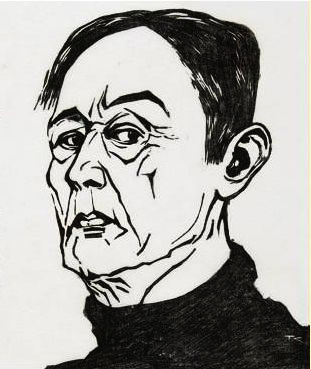
Sijctghen (1627-1650)


Sijctghen (*1627- † 23/10-1650)
(portrait 1647)

From Paulus Potters’ etchings of cows (before posting) to his colleague Albert Cuyp (1620-1722) isn’t a big leap. They were contemporaries, both renowned Dutch landscape and animal painters. Both famous in their lifetime. Doing my best giving at least the impression of a logic and coherent build-up of my Blogging endeavours, here goes.
 Cows etchings and drawings by Albert Cuyp. Compared with similar works by contemporaries like Paulus Potter, Karel Dujardin and Nicolaes Berchem they appear very "modern". 

You’ll find his sketches and prints used and worked into his and others' paintings: National Museum stuff. His Dutch landscape paintings are as famous as the 17th century Dutch landscape are itself.  Carefully arranged cows and other cattle. Bucolic and panoramic river views of cities and arcadisch landscapes stretching endlessly beneath famous and dramatic “Dutch skies”. The Golden Age of Landscape painting.

But the portrait of Sijctghen the Duck is an altogether other story. Its owner probably commissioned the painting for her 20th birthday. Which was already pretty remarkably old for a duck, even a tame one.  He was no doubt one rich and proud farmer. Click here to find a 1Mb picture of the painting. Sijctghen was a production duck. Laying 100 eggs each year in her long life, as she proudly claimes. Her biography is told, by her self, in the form of a poem painted left in the painting in a beautiful handwrighting. She is telling us about her virtuous and productive life, that she never mated, lived her life in chastity, virtue and servitude. The life of a nun. A sanctimonious message ordered by her owner perhaps, the commissoner, her jailer? Had she only be free. Have you ever seen free ducks "at it" in spring ?
She tells us also she survived and healed from broken legs. Probably describing “the treatment” undergone in her youth preventing her ever to fly (away). The fact she never mated is maybe giving another clue because these production ducks were kept in the pen and no sooner they've laid their eggs in the morning they were fed and freed keeping them more or less farm bound. All over Europe, ownership tagged in the bill or flippers. Eggs were sold to bakers, sometimes even as far away as London. These ducks often wandered about and are known to have mated with wild ducks. Today their tame genes are spread in every begging bread-fed duck in the park all over Europe.
No males around meaning she maybe was kept in a closed aviary just with other nuns. Sijctghen asks the poem to be finished after her death. It was. She came into this world the year the population of nearby city of Delft was decimated by the Plaque and she met her maker on the 27th day of October 1650, aged 23. Using chickens for mass egg production came into fashion centuries later after the discovery of the causes of salmonella and paratyphoid spreading.

This sentimental and moving portrait is all the more remarkable if you see what Cuyp was otherwise world famous for. Like this View on Dordrecht, his native city. Abraham van Calreat (1642-1722), probably a pupil of Cuyp, and the 17th century specialist in painting horses, whom’s paintings sometimes were mistaken for Cuyp’s because he used the monogram A.C., is winking at us even after 400 years. He was born and lived in the same city of Dordrecht. He shows Syctghen, the subject of his teachers unique painting, in this horse painting. Maybe it was commissioned by the same no doubt wealthy owner.
But now the good news. Sijctghen is alive! I’ve found her, her family, her genes and even her reincarnation.
Believe it or not she's reappeared and German painter Alexander Koester (1865-1932) is my witness. All he ever did was painting ducks. And more ducks. Probably the same flock of ducks over and over again. He became so good at it he earned a gold medal in America. In St. Louis' World Fair of 1904..... and was nicknamed “Enten Koester” (Duck Koestner). He’s truly the Renoir of duck painting. In the end all he needed was a few brush strokes of paint to create a life duck. A true impressionist magician. And I have one, a genuine Duck Koester. Syctghen probably afterall did lose her virginity. Somewhere between 1647 and 1650 because here, her likeness, her great-great-great-granddaughter is swimming, lower right.  
Found in a recent car boot I ofcourse realize it’s not an oil painting, it’s a very nice 1930’s quality reproduction. But who cares, try finding one. To know what you must be looking for I'll intend showing  you some serious duck painting by Duck Koester in next posting. 

Sunday, 3 June 2012

Pissing at the moon, an update


Today an update on the research and posting on the "pissing cow". I now think I’ve found the original source of the stream. Potters etching of the pissing cow was edited in 1650 in a small collection of 8 small etchings named "het Bullenboekje" (the bull booklet.) Potter wasn't the only Dutch Golden Age painter creating these small pastoral designs and etchings for bread and butter. Affordable art in contrast to his paintings which were Kings and Queens stuff even before the paint was dry. But Potters designs were copied und used the most. By himself in his paintings and by many other artist even during his short lifetime. He died 28 of tuberculosis, a desease often transmitted by .... cows.
With his booklet Potter followed the example of Italian painter Antonio Tempesta (1555-1630) before him. He edited likewise such a design booklet in 1600. It was also used by Rembrandt. Here are Potters original 8 etching of 1650. I couldn't find a site showing these little gems together (They are also in the book, below)


Juts recently I discovered that Potter, in the year before, painted his most elaborate, admired as soon it was ready, and complex work on commission for Princes Amalia van Solms (1602-1675). She was the widow of reigning Prince Frederik Hendrik of Orange (1584-1646) of the Netherlands. In 1649. The painting was supposed to decorate one of the chimney-walls in the same house that her royal descendant (12 generations later), our Queen Beatrix,  today calls her home: the Noordeinde Palace in the Hague. 
The painting is known as “het Boerenerf” (the Farm yard) or "the Pissing Cow" although there are many other animals doing all sorts of other interesting things. Try finding a picture of this painting on the www. Strange.. 


But to keep a long story short. The painting was denied, the order cancelled, because her ladyships’ inspector spoke of “the presence of an object too foul .....”. The painting, a few years later after some haggling over the price, was sold to the royal family of Sweden. It eventually ended up in 1815 in the Hermitage in St. Petersburg, probably bought by the Tsar who couldn't have foreseen  he had so little time left to enjoy it.

It’s not however Potters most well known painting. That, of course, is “The Young Bull” permanently on display in te Mauritshuis Museum in the Haque. It was brought back with great ceremony in 1815, after the French stole it in 1795. Together with Rembrandts' The Nightwatch, probably Hollands most enigmatic paintings.

I think I was the very last generation who learned to read and spell with farmer "Teun", seen both leaning to the tree and on "het Leesplankje" (reading plank) obviously borrowed from Potters famous painting. I learned today.   


"The Farmyard" was back, on loan in the Netherlands in the Mauritshuis Museum 1994-1995 for the great Paulus Potter exhibition. The catalogue, written by Amy Wals, edited by Waanders, “Paulus Potter, schilderijen, tekeningen, etsen”, is still available.  New, 200 pages, with  many wonderful and rare pictures. Search the various pre-owned books sites (Amazon, Abebooks etc.) It's a must have for every lover of great (graphic) Art. The small price making up for being written in Dutch.   

Sunday, 27 May 2012

Elisabeth Sawyer-Norton, some more prints


Elisabeth Sawyer-Norton
(1887-1985)
American painter, printmaker and sculptor.

(Continuing and updating from november 2010)


In november 2010 I showed the wonderful woodblocks by Elisabeth Norton on the Linosaurus. After a short break in Blogwriting and the sending of the cockatoos print by follower and reader Shaun from Lincolnshire last week this is a good opportunity showing some more newly discovered examples of her prints that have turned up over the last 18 months. 


Many of these new prints I found at Richard C. Frey Fine Arts  California (US)


The Cockatoos were shown in an auction sale announcement together with this "watering cattle (Pesos?)" print. It's not by Elisabeth Norton and I request the help of readers to identify the monogram in the cartouche or possibly the artist. (It could read "To Max, loving Thea S........gs").  

Friday, 11 May 2012

Johannes ten Klooster: modest printmaker


Johannes Frederik Engelbert 
ten Klooster

(Java 1873 - 1940 Veere)

Royal Dutch Indies officer,
painter and graphic artist.

Are you in for a treat ?  Today I'll present to you my most recent encounter in the world of printmaking. I had seen one or two examples of ten Kloosters' printmaking skills before. In the 1927 Studio and Malcolm Salamans “Art of the Woodcut, Masterworks from the 1920’s” for example. In it Salaman writes highly of the quality of his prints. And in 2007 ten_Klooster was awarded an exhibition in the Tropen Museum in Leiden, Netherlands. I missed it, but today I share a selection of his finest prints. Click all pictures to embiggen. 
Born from a Dutch father and a Javanese-Chinese mother in Java,  Netherlands Indie (Indonesia) Johannes ten_Klooster followed a military education and career in Sumatra and later in what is now called Irian Jaya, In those days the province of Papua.
Retiring in 1918, at 45, and moving to the historical town of Veere, Zealand, in the land of ancestors, the Netherlands, he started a new career as an artist. On leave in 1907 in the Netherlands he had received painting lessons from Dutch painter Willem Adriaan Konijnenburg (1868-1943). And painting he did between 1907 and 1918 in Papua. Some of his best paintings were made there on location.
But most of his paintings and woodcuts of tropical scenery, exotic people, dancers and fishermen, were created in the Netherlands either from memory or from sketches he had made earlier. All the more remarkable.
He developed very much his own style and was invited (only the most prominent artists were) creating this cover for “Wendingen” in 1928. In its days the most prestigious Dutch art Magazine (above).
Hendrik Willem van Loon (1882-1944) a Cornell professor, (American  citizen in 1919) journalist and between the great Wars America’s most famous Dutchman was ten_Klooster’s neighbour in Veere between 1927-1932. Himself a writer, publicist and illustrator he also spoke very highly of ten_Kloosters Asian modesty, his originality, craftsmanship and artistic talents in the July 1930 volume of the Forum magazine (the magazine was ended 1930).
The reason why so little of his work is seen in public probably is because most of it is kept hidden in museum collections all over the world. I found several in the British Museum but also in Australia, New-Zealand and the City of the Hague Museum (Haags Gemeente Museum). 
North Sea storm over Veere, Zeeland provice, Netherlands 
And the Tropen Museum holds some 30 of his prints. Together with the 2007 exhibition a book was published with an index to the 178 (!) woodcuts he produced between 1918 and 1940. Van Loon brought some to the USA in the 1930's as he proudly states in his Forum article.
Although the signature is faded beyond recognition I’m now convinced my 1922 resting tiger print (read here) wich I discovered last year is also by Johannes ten Klooster. I’ve already found an affordable copy of the book and will let you know soonest.


Roses thrive on sunshine, deserts on drought, babies on milk and alcoholics on beer. Bloggers, like ordinary humans, thrive on interaction and feedback. Consider leaving a comment if you've enjoyed (or used) the contents of this posting.