Showing posts with label British Printmakers. Show all posts

Saturday, 19 September 2020

Roman Black (Blachowski) (1915-1969): Unknown British printmaker

Roman Black 

(Poznan 1915 - 1969 ?)

 too good to stay unknown 

 Polish-British printmaker 


Three Graces (linocut) 


This copy of Roman Blacks 3 graces was found in the National Gallery of Victoria in Melbourne Australia; it was purchased in 1955 from the Estate of the artist. It is the only example of his printmaking I was able to find after stumbling over it accident, researching the various classic 3 Graces engraved and lithographical copies after antiquity sculptures and old-master examples.


It is distantly reminding of the 3 Graces (painting) by his contemporary Austrian painter and graphic artist Otto Rudolph Schatz (1900-1961)


Roman Black was born in 1915 in Poznan (Poland) as Roman Ian Błachowski where he studied geography. He might be related to a prof. Stefan Blachowski (1898-1962), a psychologist and after WW-II rector of Poznan Academy. Roman Blachowski is the author of 20 scientific papers in the field of geography published before 1940. 


Before WW-II he was interested in painting and had his first exhibitions in Poznań. The war found him in Great Britain where he took the pseudonym Roman Black. After the war ended he studied, among others at the Polish School of Painting in London, exhibiting his work in London and Madrid. 


His naturalisation was approved march 10th 1949 (“seaman and artist, living 15 Winchester Road”). He is only otherwise known from a series of colourful linocuts with Spanish landscapes kept or exhibited in Poznan, but I could not retrieve any pictures.  


A 1959 watercolour showing the historical bridge in Mostar in (Bosnia-Herzegovina) was auctioned as a lot of 4 in a 2018 sale (+ “Teatro Roman, Verona” and two others) by Roseberys in London. 


All pictures borrowed freely from the Internet for friendly educational and non commercial use only.


Monday, 4 January 2016

Elizabeth Field-Eden, british printmaker

Field-Eden, Elizabeth

(1902 - ?)

British painter and printmaker


Recently I was pointed by Tom from Boston to this watercolor (for sale with a "Buy-Now" button in Ebay at a Cotswold dealer) and "followed" by a hoard of interested but not daring to buy customers. Supposedly it is a study for a woodblock print. Wouldn't it be nice to know if she really came to carve the blocks for making a print ?


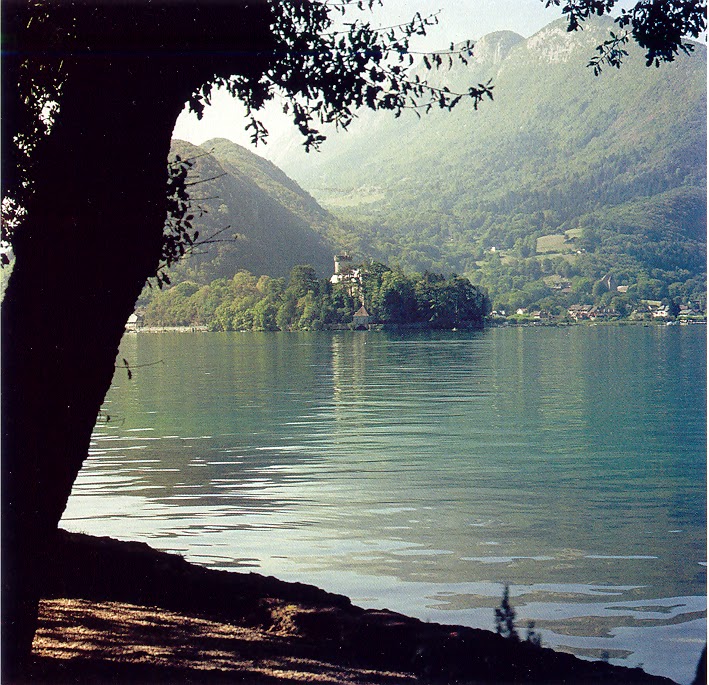
Again Wolfgang, the Wizzard from Frankfurt, solved the puzzle of the castle’s location: it’s  Chateauvieux also known as Chateau Duingt on the borders of Lac d'Annecy below the spikes of the Massif du Taillefer. It is much nicer having a print or painting with a name or title.  


Trying to find out some more about the artist I landed in a 2011 posting in Steve Bishop’s former and abandoned Blog and found these two other examples of woodblock prints by this artist. 


Although Elizabeth is not treated in my copy of “British wood engraving of the 20th century” by Albert Garret she was in the Encyclopaedia of British Artists 1880-1940: a watercolour artist and wood engraver who had studied at the Birmingham Central School of Arts and Crafts and then on to the Slade School of Fine Art in London. Recorded addresses as Wolverhampton c1925 and then Edgbaston (near Birmingham) by 1928. Some exhibition record with 16 works shown at the Royal Society of Artists, Birmingham and 2 works at the New England Art Club. 


Thanks to the label on the back of the painting combined with an entry in an old telephone book she and her husband, a W. A. Field, who most probably was involved in the classics and/or archeological world, lived in Coleswood Lodge, East Common, Harpenden (Hertfodshire) some 40 km. North-East of the centre of London. So the painting could actually be from the artists estate.  


Obviously Paul Cezanne (1839-1906) was here too. 

----------------------

All pictures borrowed freely from the Internet for friendly, educational and non commercial use only.  

Saturday, 19 December 2015

Hilda May Gordon, a colorist abroad.

Hilda May Gordon
(1874-1972).

British archaeologist and painter.

She studied under Frank Brangwyn (1866-1956) and Sir Hubert von Herkomer (1849-1914) at the Bushy School of Art and joined Brangwyn on a painting trip to Italy in 1900. 


A significant part of her paintings consists of tens of aquarelles painted in Palestine around the year 1900. 


Although inspired by the Orientalist academic trend, some individual shades can be traced in Hilda May Gordon's small paintings, in particular her tendency towards the light cloudy shade, and her remote view which is always one of a curious but cautious tourist. 


She set off travelling for a few months in 1922 and ended up going on a trip around the world, which lasted six years. During this time she visited India, Kashmir, Tibet, Burma, Thailand, Indonesia, China and Japan and produced a large body of watercolour paintings - the product of her keen ability to render people and the atmosphere of exotic places in colourful compositions.
-------------------


The expression on the face of this cute baby Orang Oetang (she saw probably while in Indonesia) instantly reminded me of two woodcuts by Dutch artist Theo Dijkwel (1881-1952) who in London had been a student of pre-Raphaelite painter Arthur Hughes (1832-1915). Dijkwel isn't very well known and there aren't many examples of his work to be found but most of his prints I know are about animals and show, besides skill, a keen observer and a very sensitive artist. His subject will have lived in Amsterdam Artis-Zoo   


------------------


I love to read about adventurous women artists instead of marrying and having a husband and a family traveling the world and leaving us accounts and pictures of the world they engaged.  


Hilda May Gordon was such an adventurous artist and I only happened to discover her stumbling over these recent Ebay offers of woodcut prints not mentioned anywhere before (as far as I know). Because there were several  copies they also learned she happily experimented with colors


Heaven knows where they came from but I could not resist having a try keeping at least 3 copies of her unsigned (African) woodcut prints together. 


All other pictures borrowed freely from the Internet for friendly, educational and non commercial use only. 

Thursday, 8 October 2015

Trouvé: Elisabeth Gowanlock Molyneaux

Elizabeth Gowanlock Molyneaux 
(1887 - 1969)
Scottish painter and printmaker


Thank you Charles for your encyclopedic knowledge on British printmakers and fast help. Not B. G. but Elisabeth Gowanlock. And along Charles send from his collection this other example of Elisabeth's printmaking artwork for sharing: Melrose Abbey, south of Edinburgh, Scotland. 


Elisabeth was a prolific watercolor artist who painted landscapes of Scotland, France and Italy. One of her favored locals was the Isle of Arran off the Scottish coast. Her work was exhibited at the Glasgow Institute of Fine Art, Royal Scottish Society of Painters in Water-colours and the Paris Salon.
She is listed in The Dictionary of Scottish Painters, 1600-1960 by Harris and Halsby, A Dictionary of Contemporary British Artists, 1929 by Dolman and the Dictionary of Women Artists by Petteys.

And here's what I was able to scratch from the Internet this morning: 


-----------------------------------------


And reader/fellow-blogger Darrel C. Karl who also went through his archive and collection trying to find more about which Mill exactly Elisabeth chose to depict. Here's the picture he's send of Frank Brangwyn's original sketch of a "Dutch Pumping Mill" published in the book "Windmills" by Hayter Preston and Brangwyn.


-----------------

And then there's this "Melrose cottage" by American printmaker William Seltzer Rice (1873-19673) who obviously visited Scotland but so far I was unable to find an account of his trip. But I did found a mentioning of another Scottish print: "Zinnias and Aberfoyle - Scotland",  a picture of it also stays in the dark. Aberfoyle is located just North of Glasgow. 


All pictures borrowed freely from the Internet for friendly, educational and non commercial use only. 

Monday, 5 October 2015

B. G. Molyneaux, British printmaker


Reader Tom send me this nice Plodding Miller and Windmill woodblock for confirmation and identification of the printmaker. I was positive I'd seen it before, some time ago, but it took me nevertheless some time puzzling and understanding and reading the signature, go through my archive and find the maker: B.G. Molyneaux (not Molyneux, and yes, I know, when you see it it's easy peasy ........) 

And that's about all I was able to find. In spite of the french connotation it is a British family name since Anglo Saxon times. Molyneaux is the Irish variety or branch and both spellings of course referring to the profession of ancient ancestors in France: Moulin-le Meunier: Mill-the Miller. The name Bernard seems to circulate in the Irish branch and I wonder if this was a one-off by this obscure artist. Maybe a certain British expert can help ? Another copy of this print was sold last year on Ebay. 


And then I happened to remember this print (Dutch, possibly Belgian), no color and because of that maybe not as attractive and appealing, but two artists obviously sharing the same idea around the same time ? Monogrammed J.H. (or J.N.) 

PS: This type of mill was active in England, Belgium and the Netherlands according to Frank Brangwyn's (1867-1956) extensive lithographic treating of this subject. 


All information and help on these prints will be shared and received in gratitude. 

Tuesday, 8 September 2015

Harold Frank Collinson: in Normandy !

Harold Frank Collinson
(Nottingham 1886 - 1955 New York USA) 
British etcher, printmaker and teacher.  

Harold Frank Collinson I've met before in Charles' Modern Printmakers Blog where he wrote enthusiastically about this wonderful woodblock print: Haying in the Vale of Trent. 


And although Charles seems to show another (?) copy with greenish skies (or has the first one been through Photoshop's laundry ?) 


to try and capture poring rain is on the one hand very Japanese ("Shono Haku-U", Driving rain at Shono) by Hiroshige (1795-1958) but .........


there's also the possibility Collinson was a British artist following John Constable (1776-1837) and William Turner (1775-1851) immensely enjoying  to master and capture typical British foul weather.  


You can read most of what is known about Collinson at Charles' Blog, but it wasn't mentioned he'd left his native Nottingham for America in 1940 and lived there until his death in New York in 1955. Collinson is mainly known as an etcher (and a teacher) but thanks to reader Tom here's another woodblock print by him. It came to me without a title. It took me some time but in the end I was able to figure out where it is and what it Collinson is showing us.


It is a view on a bend in river Seine, the ruins of Chateau Gaillard situated on  the steep hill (much like his native Nottingham Castle), the village of les Andelys below and counterbalancing the deep blues of the village and Eglise Saint Sauveur in the shadows in the lower right corner a heavy shower is placed in the upper left corner. Probably created in the 1920-30's ? 

What brought Collinson to Normandy and les Andelys ? 


Maybe he was on holiday or on his way to Paris, following the path and footsteps of perhaps the greatest of all British drawers and painters: William Turner (1775-1851) who also made the climb up the steep hill. 


Turners painting was turned into an etching by master engraver and keeper of the Prints Department of the British Museum in London John Thomas Smith (1766 - 1833). As an etcher Collinson could have been familiar with that print too. On the other hand: Collinson and Turner just happened to have both witnessed a heavy rain shower on the horizon when visiting les Andelys and chateau Gaillard.      


Collinson could also have been on his way to nearby Giverny, on a pilgrimage to Claude Monet's (1840-1926) gardens, just a few miles up-stream. I couldn't find a painting by Monet of  les Andelys but Australian impressionist Emanuel Phillips Fox (1865-1915) was definitely here painting the view from the same hill in wonderful bright pastel colors. 


And Paul Signac (1863-1935) lived and worked in Andelys in 1886 drawing and painting the picturesque village and river Seine slowly flowing to the West. It was here where his fame as a  painter was made.  


Henri Lebasque (1865-1937) a post-impressionist painter also painted from  the same spot where Turner stood before and Collison after him.  


There is mentioning of a woodblock print of Chateau Gaillard by British printmaker Phillip Needell (1886-1974) but I failed finding an example. Maybe there's more to come, maybe they knew each other. But then, I'm not a n expert on British prints or printmakers.      
-----------------------

Within the hour, after just  9 readers so far, thanks to a commenting reader the (a) Phillip  Needell print showing Chateau Gaillard was delivered to me. Here it is:

(les Petit Andelys and Gaillard Castle ruins seen from the banks of River Seine). 

---------------------
UPDATE 
Two years later (december 2017) reader Tom from Boston pointed me to another Gaillard print by Philipp Needell offered in Ebay. 


------------------------------------  

All pictures borrowed freely from the Internet for friendly, educational and non commercial use only.