Tuesday, 12 April 2016

Margarete Donath, quest for a forgotten Dresden painter & printmaker (1/3)

Margarete Donath (I)
( ? – after 1930)
German painter and printmaker


Just this one print in the Van der Grinten Collection shown in the indispensable “Frühzeit der Modernen Holzschnitts”, and her name is (almost) all that is known about this artist.  She is not mentioned in any Artist Lexicon but the equally indispensable “1930 Dresslers Kunsthandbuch” gives: “M (aler, painter), Dresden, Weisser Hirsch, Hermannstrasse 2”.
In an article treating Dresden street names “Weisser Hirsch” with distuingished villa’s and sanatoriums, private hospitals and guesthouses it is confirmed that Margarete Donath (“Malerin und Graphikerin”) lived here. In 1922 the street was renamed “Lauritzerstrasse” (which obviously had not reached Dresslers editorial staff in 1930). There are only 4 villas in this small stretch of street.

An attempt to reveal her identity with the help of readers.

1) The neighbourhood. 

Weisser Hirsh,  Loschwitz near Dresden

Crossing river Elbe the “Loschwitzerbrücke", completed in 1893 and nicknamed “das Blaue Wunder”, connects Dresden with “Weisser Hirsch” a part of “Loschwitz”, today greater Dresden.
Bertha Schrader (1845-1920) painter and printmaker lived in the Christianstrasse 19 (the residence of  Dresdens specialists and doctors) in Dresdens “Altstadt” (I met her before in this Blog: follow the tag) painted the bridge and river Elbe.
After completion of the cast-iron bridge two steam driven funicular railways ("Stadtseilbahn") were build: a suspended railway leading to a panorama and a 550 meter stretch of railway connecting Loschwitz with "Weisser Hirsch" a villa quarter developed around an ancient Inn by that name.

This particular area of Dresden end of the 19th century became the centre of the "Naturheil-sanatorien". The treatment by natural remedies developed in contrary to the scientific medicine during the 19th century. Dresden was before and after 1900 a centre of "naturopathy": the pioneering therapy using primary the applications of diet, physical exercises, water and light. It saw some famous patients, writers, poets, artists: Franz Kafka, Rainer Maria Rilke, Thomas Mann and Oskar Kokoschka seeking treatment by natural remedies. read here*. 

---------------------
One of the most prominent and successful doctors running a sanatorium and health Spa in Weisser Hirsch was Dr. Heinrich Lahmann (1860-1905).  He started his business in 1887 and it became so successful, adding many building, baths and exercise facilities and in a short time added several (7) villas to his emporium to accommodate the flow of new patients.
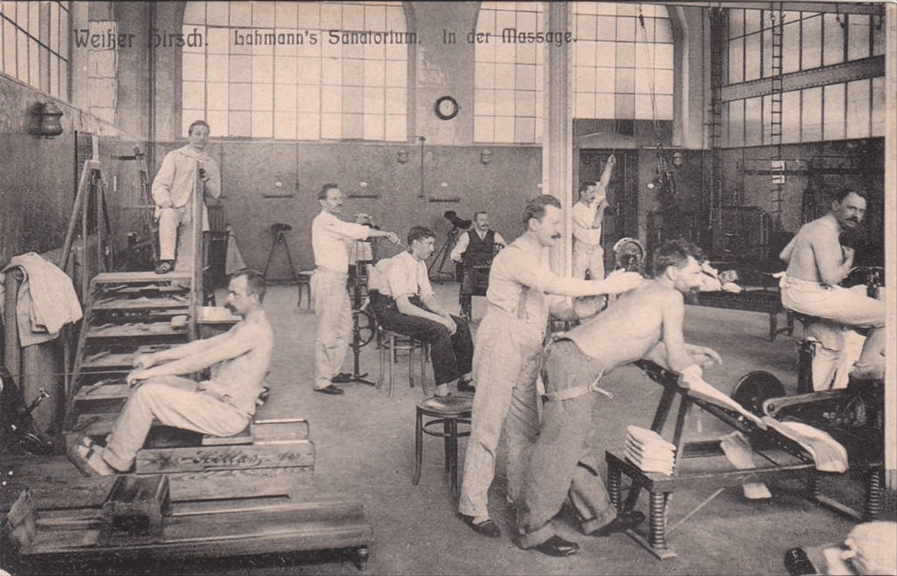
One of them, Villa Eschebach, build in 1877 as a summer residence for Dresden industrial, art collector, Maecene and one of Dresdens richest inhabitants Carl Eschebach (1842-1905) he rented from 1887 as his house but after his untimely death it is known as "Kurpenzion Donath". The health related connection between Lahmann and the Donath family will be treated in next posting. Although I have no idea how the Donath name came to be attached to this perticular house. 
The villa was used as a hotel for patients of the sanatorium until probably 1918 when it was bought by Dutch Consul Willem van Ameyden van Duym (1857-1917) and his family who owned the house until 1930.
Both Lahmann and Eschebach died in 1905 of complications of the Influenza pandemic. Penicillin had yet to be discovered (Fleming, 1928) but it lasted until WWII becoming available as anti-biotic treatment. No sanatorium or naturopathy treatment could save these men. 


All pictures borrowed freely from the Internet for friendly, educational and non commercial use only.

All pictures mouse-clckable to embiggen. 

Next:

part 2) meeting the neighbors in "Weisser Hirsch" Loschwitz, Dresden 1900-20.
part 3) meeting some members of the Donath family in Loschewitz, Tolkewitz, Gartenlaube and Lockwitzgrund.    


Saturday, 9 April 2016

Franz Bochmann !

Franz Bochmann !


Within 24 hours the identity of the artist in before post was (at last !) revealed by Dr. Rudolf Rieger from the "LETTER Stiftung" in Cologne. A foundation promoting Art and Culture with a research department and a library to support Art historians, Universities, research institutions and libraries. It researches, documents and collects, works and information concerning obscured, forgotten and lesser known artists in the fields of Sculpture, Medals and relief, and Graphics.  

I tried to find biographic (any) data concerning Franz Bochmann who was active in Leipzig around 1930. He is not mentioned in any Artist Lexicon nor in Dresslers Kunsthandbuch 1921 & 1930. The signature was identified from a print "Zwei Pfefferfresser", in the Foundations collections and was published by the "Balder-Presse" (Gerhart Söhn u.a. : Die Balder Presse 1925-1934. Chronik und Werkkatalog; Düsseldorf 1996)


Thank Dr. Rieger, and thank you Wolfgang.

Wednesday, 6 April 2016

Bachmann (?), a still unidentified printmaker: some new finds

See the next post for identification !


With international support, combining databases and archives most attempts in identifying signature problems of unknown printmakers usually are successful. Maybe not always instantly but eventually, sooner or later we'll celebrate our  succes. 
With my latest acquisition, a rare copy of Dresslers Kunsthandbuch 1930 (9th and last edition), combined with the 1921 (8th edition), a Lexicon of living German artists,  the chances of finding an artist in Germany have greatly improved. It already revealed the names of several other not identified printmakers.Which will be revealed and published in due time.  
But not this artist. I showed some examples before (3 from my personal collection) but recently a set of 5 others was found and the new owner Wolfgang who is an ally in my search for the identity of this artist. Even more recently the "Enzian" print (below) surfaced. 

So, another entry in the Internet and another attempt trying to find out with help of readers. Maybe with the help of some one who is really good in reading the German Sütterlin script. 
In all prints the signatures are very similar so I have low hopes of waiting for a more "legible" example to shine the light and render the solution to this puzzle. 
Bachmann, Bochmann, Litzmann, Lietzmann and some other suggestions have been made, but so far without a positive outcome. Any (all !) suggestions are very welcome.   

All these pictures embiggen by mous-clicking. 


See the next post for identification !


Friday, 1 April 2016

Niagara inspiration

NIAGARA 
(water and stream) 

I think you're gonna like this posting. The paintings will take you from one artist to the other but there's a connection, just follow my stream (Niagara) of consciousness. Clicking the names will bring you to the Wiki-biographies and museums. 

This posting started with stumbling over this "steaming" painting, and Googling I found a companion, surprised there wasn't a site showing them together. The one above was created in 1892 and is in the MFA in Boston obviously inspired, or a tribute, to her teacher William Morris Hunt 1878 sketch (below, with rainbow). He died 1879. 

The second (below) one I found has a date of 1898 and I have no idea of the paintings location. Both paintings are by Sarah Wyman-Whitman (1842-1904) a talented bankers daughter. Read and see more of her divers art here in Lilly's (sadly discontinued) Japonisme blog. 

Sarah started her painting lessons (she did far more then paint alone) with William Morris Hunt (1824-1879). One of the last paintings (commissioned by the New-York State Capitol Assembly Chamber) he did was this Niagara Falls, in 1878. Hunt had studied in Paris and so had Sarah. 


Hunts Niagara painting(s) are kept in the Boston Museum of fine Arts 

Hunt, as a popular Boston portrait painter tried to outdo a much praised  painting of Niagara Falls created in 1858 by Frederic Edwin Church (1826-1900) a celebrated American landscape painter whom Hunt much admired. He even took, 20 years later, for his view the same vantage point. (I think he maybe did, outdo Church....)


 Church' "Niagara" is since 1858 in the Corcoran Gallery of Art in Washington 
along with this one below


George Innes (1825-1894), 30 years later, was also commissioned to paint the famous Falls and also after a stay in Paris trying to outdo (there are critics claiming he did) Churches majestic painting in 1884, he visited the falls in 1881. His "Blue Niagara" (below) is also in the Museum of Fine Arts in Boston.


A colleague and friend of Church, Louis Rémy Mignot (1831-1870) the son of a Charleston coffee-shop owner and baker (not a banker like Sara Whitman) had studied in the Netherlands (with Andreas Schelfhout (1787-1870), returned to America and opened a studio in New York. He's traveled to South America with Church to paint. And obviously to Niagara too. His brother settled in the Netherlands leading a successful tobacco company in Eindhoven.


 Mignots' Niagara is the Brooklyn Museum in New-York.

Returned from South America the Civil War had broken out and he emigrated to Europe settling in London, exhibiting in the Paris World Fair in 1867 and in the Royal Academy of Arts in London. Traveling in France he was caught up in another war, the French-German War of 1870-71, was taken prisoner by accident in Paris, eventually released, returned to his house Brighton to die of small-pocks (variola) soon after, only 39, probably infected in a Paris prison.  (He has no  English Wikipedia entrance)
---------------


(Where-abouts of Whales' "Niagara" unknown to me).

This last Niagara falls painting I've selected from the hundreds of paintings showing the famous falls because it is obviously inspired by the above artists. It's by Robert Reginald Whale (1805-1887), born in Cornwall he was a self taught painter, but he also went to study in London. He left England and immigrated to Burford Ontario, settling later in nearby Brantford in 1852 where he remained the next 35 years painting. He travelled back to England 1870, 1872 and 1878. He is the father of painters Robert Heard Whale and John Claude Whale and is an uncle to John Hicks WhaleHe lived only 40 miles from Niagara Falls...... 


------------------------


All pictures borrowed freely from the Internet for friendly, educational and non commercial use only. (Please do not sue)
          

Wednesday, 30 March 2016

Stephan Krotowski, forgotten Berlin poster artist


My research into an almost forgotten but wonderful Berlin painter (who happened to find in a 1930 exhibition catalogue in Berlin) so far had not been very successful. But I feel lucky it has nevertheless lead me recently to: 

 Krotowski, Stephan Samuel 
(Berlin 26-01-1881 – 1948 London). 
Jewish (fashion) illustrator, poster and bookcover (“Buchschmuck”) designer.
("Plakatkünstler"
Teacher at the Reimann School in Berlin  


He studied in Munich (I'ld like to know with whom ......) returned and worked in Berlin from the early 1910's as a graphic artist, fashion drawer and painter. As an illustrator he worked for “Ulk” magazine published by “Ullstein Verlag” in Berlin and as fashion drawer for “Fashion” magazine and “Lebenskunst” a gentlemens magazine. 

Harry Walden (Berlin 1875-1921 Berlin) was a very popular theater actor and had a short but intensive career as an early film maker and movie star. He also worked all over the world as a business man and later also performed as an actor even in America. He returned to Berlin and started in 1912 a movie production company. He died, addicted to morphine by suicide  


Krotowski also taught fashion-drawing at the Berlin “Schule Reimannand thus was a colleague of Julius Klinger (read below) who, unlike Stephan Krotowski, who stayed relatively unknown,  rose to great fame later in Vienna as an iconic poster and advertising artist. 

Alexander Roda Roda (Moravia 1872-1945 New York) was an alias for Sandor Friedrich Rosenfeld, a very popular Austrian playwright and satirical publicist. He worked for "Simplizissimus magazine and lived in Berlin 1920-1933. 


The "Wintergarten" of Hotel Central in Berlin Friedrichstrasse 1881. 


Krotowski is also notable for his fashion prints for the men's clothing store PKZ (founded by Paul Kehl in 1881), based in Zurich. His family and relatives suffered greatly from Nazi persecution. It is estimated not more then 1% of the 160.000 Jews of Berlin survived the Holocaust. 
Unlike Julius Klinger, Krotowski managed to escape the Nazi regime, probably around 1938, becoming a British citizen in 1948 but sadly died very shortly after. What follows gives a interesting view (within the limits of this humble Blog) on the Arts and Crafts Education world of Berlin 1880-1930 and may explain possibly why he came to London. 
I also found these portraits of celebrities of the time: Opera singer Enrico Carosu (1873-1921), Composer Richard Strauss, (1864-1949), Pianist and director of the Berlin Hochschule für Musik Eugene d'Albert (1864-1932) and conductor Arthur Nikisch (1855-1922 leading the London, Boston and Berliner Philharmonic Orchestra.


-----------------------

Reimann Schule and Albert Reimann
(Posen 1874 – 1976 London)
Jewish sculptor, arts and crafts artist medailleur and art educator.
Private school owner and leader.  

Albert and Clara (possibly 1875-1955, I found a Clara Reimann in a British census) Reimann founded and lead the “Schule Reimann” 1902-1935. I t was a private Arts and Crafts School („Schülerwerkstätten für Kleinplastik“) also training its own teachers. In 1909 a poster design class was added and in 1910 the “Höhere Fachschule für Dekorationskunst“ was incorporated. 
In 1911 Julius Klinger (1876-1942) was appointed teacher in the “Fachwerkstatt für Plakatkunst” in Reimann’s school and was the artistic leader 1912-1915 of the the joined “Höhere Fachschule für Dekorationskunst.


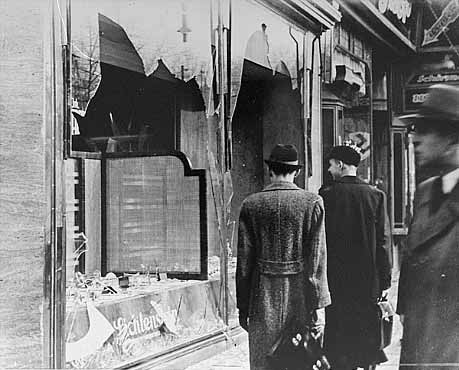
In 1927, 31 teachers taught 1000 students in 33 classes. In 1931 he had the schoolbuildings modernized and a photography section added but because of his Jewish roots and anti Jewish laws and harassement from 1933 onwards was steadily forced to sell and close his school, the last remnants, his artist supply shop was demolished in the “Reichspogromsnacht” (“Kristallnacht”) november 9/10th 1938. 

December 17th Reimann immigrated to London where his son Heinz Reimann, beginning of 1937 had esthablished the Reimann School and Studios (follow the Link) in Regency street its innovative methods and concepts were enthousiastically received and it had a significant  influence on British art and design schools and institutions. The London school closed 1941 because of the "Blitz" and finally was destroyed by bombing in 1944.
Albert Reimann received the “Bundesverdienstkreuz” from Bundespresident Theodor Heutz in 1958.From 1903 the location of the newly build school was at Berlins perimeter in Schöneberg at the corner of Landshuter Straße 38 and Hohenstauffenstraße” in the direct vicinity of the buildings of the Lette Verein

--------------------

Julius Klinger 
(Dornbach near Vienna 22-05-1876 – murdered 1942 Minsk)
Jewish drawer, illustrator, typographer, writer and graphic artist. 

Studied in the “Technologischen Gerwerbemuseum” in Vienna and later with Koloman Moser (1868-1918). Started his career 1895 working for magazines “Wiener Mode” (meeting Kolo Moser) and “Meggendorfer Blätter”
He moved to Munich in 1896 and worked 1897-1902 at weekly magazine “Jugend”. He moved to Berlin in 1897 and stayed there until 1915, but after WWI he opened a studio in the Schellingstrasse in Vienna. 
Beginning in 1918, Klinger designed a comprehensive and noted campaign promoting the "Tabu" company's cigarette rolling paper, that was advertised all over Vienna in 1918/19. Klinger devised a promotional strategy, spanning from small-sized newspaper advertisements to billboards and painted firewalls, construction site fences and winterized fountain paneling were used as advertising space, too. 
Max Lieberman 
His last poster for Jewish “Ankerbrot-Werke” was created in 1938, just before that company also was seized by the Nazis. As a Jew Klinger was seized, “abgemeldet” 02-06-1942, deported and murdered in Minsk concentration camp probably upon arrival.
--------------------------

Lette Verein:

founded in 1866 by Wilhelm Adolf Lette (1799-1868) a social politician and lawyer and under the protection and financial support of princes-royal Viktoria von Preußen (1840-1901) daughter Queen Victoria of Great Brittain. 

The “Verein” was a member of the “Bund Deutscher Frauenvereine” and was esthablished to create a public school and training facilities for young women to learn a profession, have a career and earn a living (being independant) because acces to the academies was still impossible (until 1919). It started as “Verein zur Förderung der Erwerbsfähigkeit des weiblichen Geschlechts” but after Lette’s death two years later it was renamed “Letteverein” . The school was and still is located in Victoria Luise Platz 6. The entrance building at the right, between the two towered corners.  


All  pictures borrowed freely from the Internet for friendly, educational and non commercial use only.