Thursday, 23 January 2025

Lillsjonasgard Stockholm

 Who created these water colours ?

Titled in Dutch: "De keuken" (the kitchen) and "Strijken" (ironing).  

(Found and acquired in an auction in 2024). 


Lillsjonasgard (Lillsjönäs) 

Liljenäs gård, a former manor and “fideicommiss” (“inheritable with restrictions”) and architectural gem is located on the northern shore of Bolmen. The farm dates back to the 16th century, then under the name Bolmsnäs. The farm became a manor in 1637 and was then owned by Göran Andersson Stierna. When the Lillienberg family acquired the manor in the 18th century, the name was changed to Liljenäs and the property then also became a fideicommission. The old main building burned down during the 19th century. Both wing buildings remain, both built in the 1760s.


It was a private summer resort until 1908 in Bromma near Stockholm. 


Next the property played an important role in the expansion of Bromma. By subdividing its own land, Lillsjönäs farm was one of the first to lay the foundations for a villa community. The last private owner, wholesaler P. A. Kindgren, started one of the country's earliest bus lines to increase the attractiveness of the area. The line ran between Lillsjönäs and Kungsbroplan.


In 1908 the City of Stockholm bought the farm buildings and the rest of the Lillsjönäs plots. An orphanage with an educational institution and a country school was established in 1911. 


Boys were trained in 'agricultural and horticultural professions' and girls as 'domestic servants'. This educational and support activity was new and untested, and the one at Lillsjönäs was the first in the country.


After WW-II the IAL (International Labor Law - SCI Sweden), a non-profit association that works for peace through international volunteer work was involved in running the farm and training facilities. 


The association was founded in 1943, then under the name International Labor Law (IAL) and soon became the Swedish branch of Service Civil International (SCI).


"We are an association with a long history (1943) that wants to work for a peaceful world. We believe that when people from different countries and cultures work together for a non-profit project, the conditions for a culture of peace are created. The non-profit projects can be about, for example, environmental issues or helping socially vulnerable groups. The association has no profit interest and the operation is based on voluntary work. The association is religiously and politically independent". 


All pictures and text borrowed freely from the Internet for friendly, educational and non commercial use only 


Saturday, 11 January 2025

Not Modigliaini (ID request)


This quality framed and matted reproduction (24 x33 cm) was found when I bought a nice wooden frame in a Dutch charity shop. Curious as alway I tried to find the artist/maker. The signature is more or less illegible to me. My first guess was of the many woman portraits by Amadeo Modigliani (1884-1920)..... 


However: to my surprise Google Lens was not able to find a hit. Perhaps a reader or visitor has any, very welcome suggestions. 

Tuesday, 31 December 2024

Louis Christiaan Kalff

 Louis Christiaan Kalff 

(1897 - 1976)


Besides being Joan Frances Obbes' (before posting) son-in-law (Louis married his oldest daughter)  he was a Dutch architect, designer and artist who dedicated his career to the Philips electronic company in Eindhoven. Kalff is best known for his many iconic, modern (and today "vintage") lamp designs. The Philips company with its light bulbs literally carried the light and optimism into millions of post WW-II Dutch homes. 


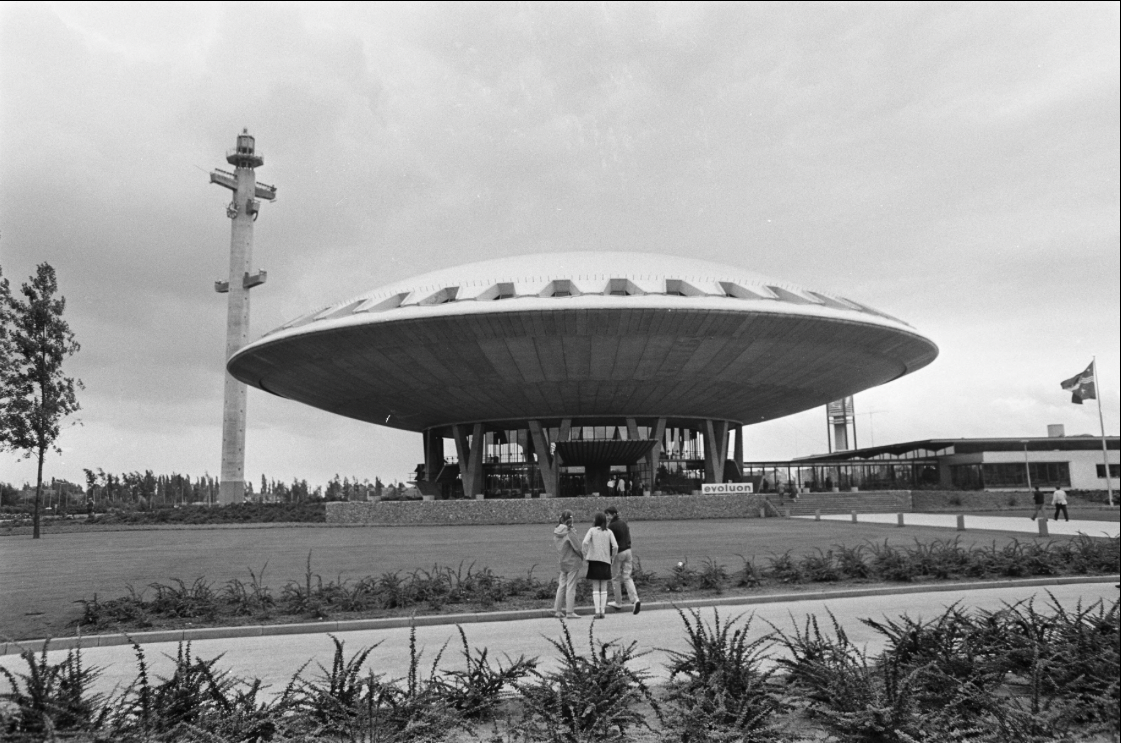
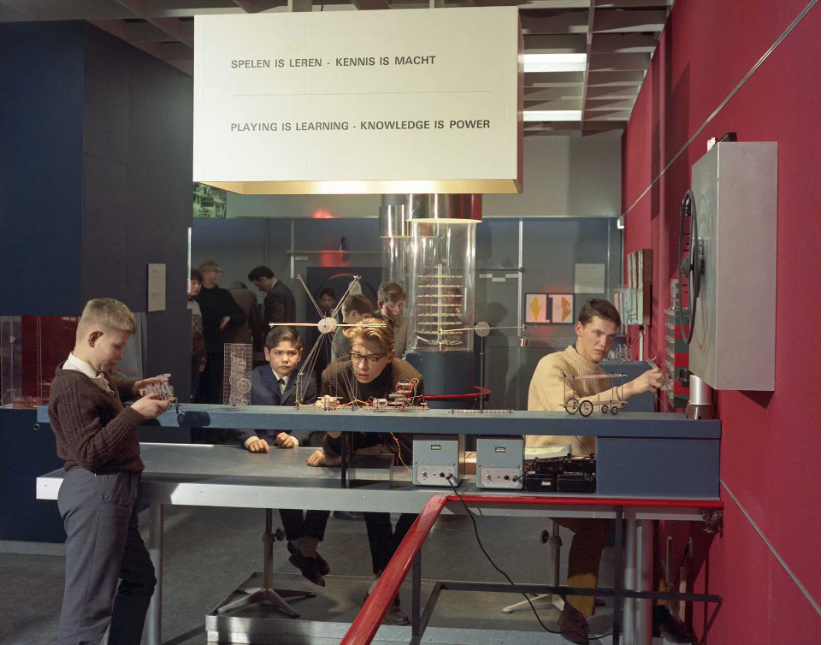
Louis Kalff also designed the futuristic (in 1966 it was a "Thunderbirds-are-go" space ship) Philips educational centre in Eindhoven. I remember, 12 years old, the trip in our family's Citroen DS along the concrete 2 lane highway (those were the days....) visiting the spectacular freshly opened building. 


.....where practically everything was allowed to feel, touch and explore. The spell held for 20 years before it was closed down and turned in a conference building. It is still an amazing and beautiful landmark.


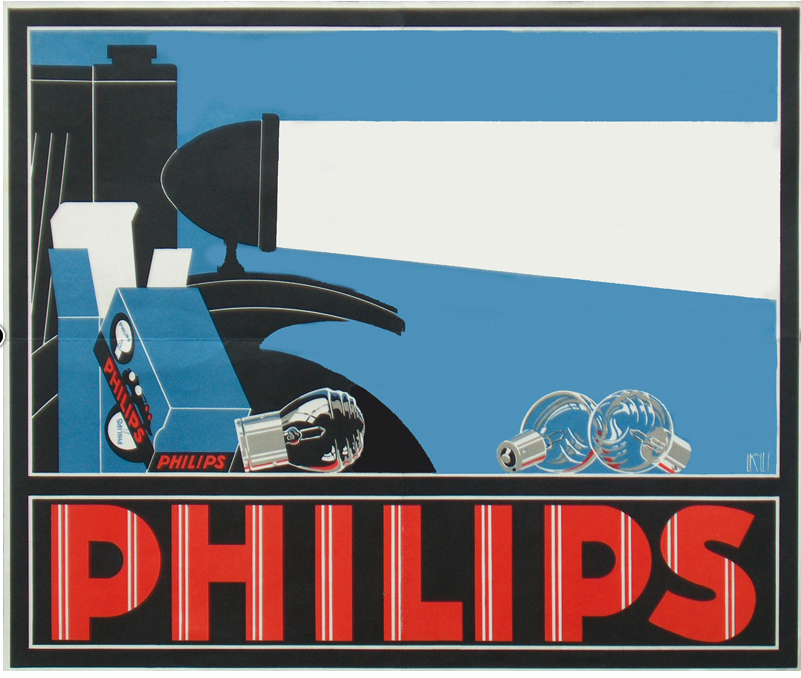
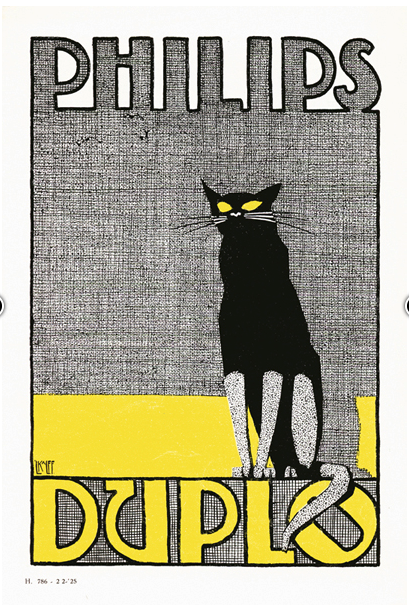
Besides the world famous Philips brand logo Kalff also designed several other very nice posters.......


....... and also was a pretty good painter.  


"Every thing is connected" said the Buddha. Had I not found Obbes's tits in a junk shop I would have never known the connection between these two extraordinary men..........

The Linosaurus sends its

Best Wishes for 2025 !

(All pictures borrowed freely from the Internet for friendly, educational and non commercial purposes only). 

Nice tits

 Joan Francois Obbes 

(1869 - 1963)

This exceptional foster family, a junkshop find, and more lovely tits and other common and not so common garden birds by this long lived naval cartographer and forgotten artist as well as the result of my investigations resulting in a freshly composed and surprising artist biography and family history you will find in:

Das Haus der Frau

a virtual collection display.

Next posting: Louis Christiaan Kalff (1897-1976) Obbes' son in law.  


Sunday, 22 December 2024

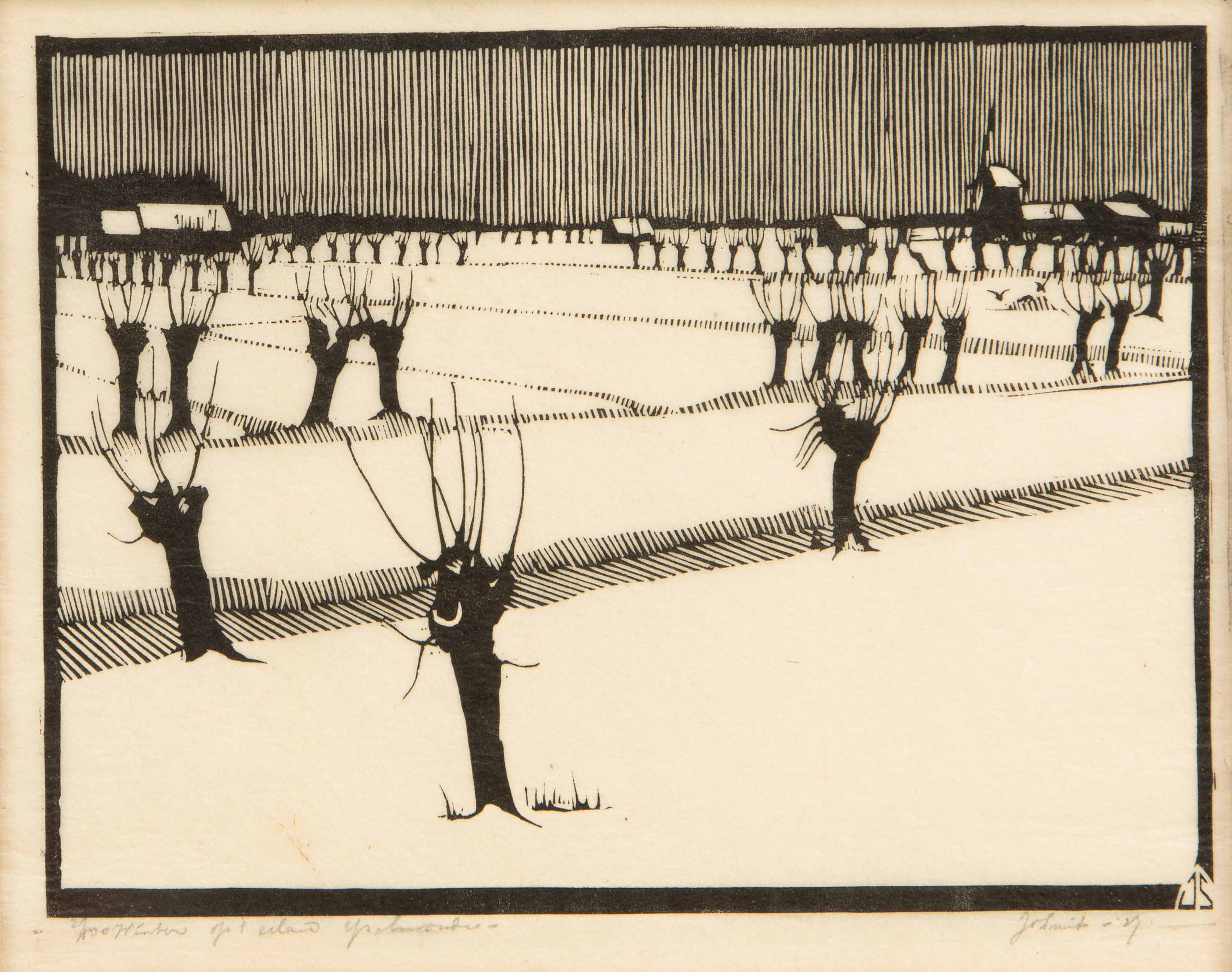
Jo Smit IJsselmonde

 '"Winter op't eiland IJsselmonde"

Johannes (Jo) Smit (Beverwijk 1902 - ?) 

I stumbled over this woodblock print in the archives of an online auction site. It was sold 5 years ago in 2019.  The artist, Jo Smit, today is completely obscured and forgotten. Just one other example could be found. One local newspaper report of an exhibition held in 1977 in his native Beverwijk is all that came to light. All biographical and artist information is welcomed. 

I really hope to find a copy of this winter print one day. Offers are welcomed. 


Jo Smit is not mentioned in any artists lexicons or in any archive. Trying to assemble something of a short biography I found Frisian roots and interestingly enough a link to the history of island Ameland. 

Jo Smit's grandmother IJnske Vellema (Haarlem 1844 - 1886 Amsterdam) was named after her island grandmother IJnske (Inschke) van der Geest (1789 - 1873). Her father David Andries Vellema (1821-1899) was a skipper and left his native island around 1840 to settle in Velsen near Haarlem starting his branch of the Vellema family. 
Both Vellema and van der Geest families had settled on the island in the 18. century originating from nearby Frisian mainland Holwerd and Rinsumageest.  To my knowledge (....)  there are no Vellema's living on the island today but 200 years later many today living native Amelanders have van der Geest genes. 

All pictures borrowed freely from the Internet 
for friendly and academical and non commercial use only. 

Saturday, 21 December 2024

Mediterrane Küste 1959: Artist Identification

 Mediterrane Küste 

(40 x 54 cm.)  1959


The artist who created this lovely large abstracted Mediterranean woodblock (Farbholzschnitt) landscape was never properly identified: Karl......?     '59. So it is high time to request some help and suggestions from readers and visitors.
65 years old but as fresh as made last week. Some 10 different colour blocks and/or templates were used. 

PS: reminding of Matisse........ ?


All suggestions welcomed.   


Friday, 20 December 2024

Abraham de Verwer.

 Abraham de Verwer (1585-1650)

(and the Dutch panorama) 

was a Dutch painter and contemporary of Rembrandt (1606-1669) also working in Amsterdam. This very Dutch river view fac-simile water colour drawing, a German high quality 1920 reproduction, was found in the same left-over bunch as the Finding Moses drawing shown in the before posting (and explaining). It once belonged to the same private collection. Its today's whereabout is unknown.    


100 years later:

with some simple mouse clicks it is possible to find related (stretched, oblong) format drawings by de Verwer to share. In  just one second (still amazed every time, being from the "Scotty-beam-me-up" and Thunderbirds generation. They show the hand of a keen observer and fine draughtsman. The oblong 13,5 x 34 cm. format adding greatly to the panorama "experience". Besides this typical format (2:5) drawing several more classic format (2:3) works by his hand can be found. Many of them marines with great panorama compositions and many types of ships and vessels drawn with great precision.


Tuesday, 10 December 2024

Finding Moses

Rembrandt - Rembrandt(?) - Ferdinand Bol 

Finding Moses 


Moses, who (this is a heartbreaking story) was set afloat in a basket by his mother Jocabed (Jochebed) in river Nile, as ordered by the Pharaoh to dispose of all Jewish born boys. This drawing shows the moment he is found and rescued and, ironically by Termuthis, the Pharaoh's own daughter. All this happend around 1250 BC if we may believe the stories and the chronicles. And the bible of course.  

Or: as close as a mortal collector on a budget can get to owning an (almost) original Rembrandt.

The drawing was part of the vast collections of important Dutch art historian, collector, critic and Rembrandt expert Dr. Cornelis Hofstede de Groot (1863-1930). He acquired it in 1902 (bought in London) and all his life he was confident he owned a (another, he had several more) original Rembrandt drawing. He was the world's expert after all. He also concluded Rembrandt's student Ferdinand Bol (1616-1680) used Rembrandt's sketch, praised jubilantly for all its qualities, for his painting. The praise is completely deserved IMHO: it is one of those genial and artistic Wonders-of-the-World pairing maximal expression and movement to ultimate simplicity perhaps equalled by Picasso's wonderful genial hand and mind 250 years later. 

Realising this is "just" a 100 year old quality reproduction I remember knowing this drawing since my 1960's High School years. 60 years later this copy kind of found me. Just try and find one ! 
  
1923

HANDZEICHNUNGEN HOLLÄNDISCHER MEISTER 

Aus der Sammlung Dr. C. Hofstede de Groot  im Haag

Neue Folge 

Vierzig (40) ausgewählte Zeichnungen Rembrandts, seines Kreises und Seiner Zeit. 

Herausgegeben von Prof. Dr. Felix Becker 


Verlag Bernhardt Tauchnitz - Leipzig 

Edition of 525. 


90 examples of Hofstede's extraordinary collection of Old Master drawings were published in 2 large sized folios of "fac simile" (technically best possible) reproductions (containing each 50 and 40 pieces) with explaining text. By Prof. Dr. Felix Becker  (1864-1922 and yes, involved in the Thieme-Becker Artist lexicon) with a beautiful type-face title page by Walter Thiemann (1867-1951). 


After a century these folios are not extremely rare because printed in higher edition numbers. They were ordered and bought by collectors, archives, libraries, museums and individuals who of course could not afford the originals, like Hofstede de Groot could. Our grandparents (at least the better situated) obviously used a choice of these fine reproductions to frame and decorate their homes.  
Thus the reality is most folios found are incomplete and complete folios are rare. Savaged folios in different states of disintegration are found in car boots, in junk- and charity shops. They are usually inexpensive, and it is always a surprise how many and which prints were left behind. 
In my cheap copy 24 from 40 were left.  Among them was "Finding Moses".  

Today making a copy digitally with a computer, a commercial inktjet printer and cellphone photo or scan is child's work. In 1923 it took incredible craftsmanship to photographically (glass-plate negative)-lithographically create a quality reproduction of a work of art like this drawing. Analog, by hand. 

---------------
Ferdinand Bol (1616-1702)
Finding Moses:  since around 1900 in Amsterdam Rijksmuseum  

No doubt after the sketch by who-ever drew it, and situated in the Egyptian summer (his nude version causing controversial commentaries).  
Rembrandt
 Finding Moses (Amsterdam Rijkmuseum)


Rembrandts version drawing of "Finding Moses", also an extraordinary drawing and also a masterpiece. A great oriental drawing/sketch with a very modern "feel". The both cut-off umbrella and the wheel (almost driving from the scene) are brilliant details. However, compared with the iconic sketch above by who-ever  created it ...............

Moses ter Borch (1645-1667)


Short lived Moses ter Borch, he died 22 years old in England, must have had notice of Rembrandt's Finding Moses. The umbrella and the servant reaching Moses from the water to another helper in the company in his drawing are very suggestive. 

Pedro América (1843-1902)  


After the actual finding and rescue of Moses who later would lead his enslaved people from Egypt to the Promised Land the story says his mother even saw Moses back to breast feed him and make him survive the ordeal on the Nile and thus at least knew he was safe after all. After which he was raised by his foster mother Termuthis in the court of Seti I or his son Ramses II (the records are inconclusive). Pedro América choice this moment of mother and child and either he had inside knowledge Jocabed was a stunningly beautiful woman or deliberately romanticised the biblical scene.  
-----------------

After Hofstedes death much of his collections of books, drawings paintings etc.. were bequested to different Dutch Museums. 
---------------

Saturday, 7 December 2024

Tea ceremony ?

Help requested  

I have no idea who created this print.

 Nor any clue to what we see: a tea ceremony ?

(23 x 47 cm.) 

It is a thoroughly Japanese (Chinese, Korean ?) in subject,  in style and character but also signed and edition numbered  (135/200) it seems to me it almost must have been created by a European artist.

The print was recently found in a large older graphics collection with mainly many fine French and Dutch artists. 

The print is laid-down (glued to a backing board) and the matt (passe-partout ) seems 1940-50s.   


Please send any idea of suggestion to help identify the maker. 

H . A . Sin B

is what I read but this made no sense so far. 

THANK YOU !

Sunday, 19 May 2024

Hans Schütz 1906

 FRÜHZEIT des Modernen Holzschnitts


This winter print was exhibited in the winter of 2014-15 in Städistche Wessenberg-Gallerie in Konstanz in an exhibition showing 60 winter woodblock prints from the collection of Munich collector Felix Häberle (1941-1921). Sadly there was no catalogue (inquired). Its title "Baum über ein Bach in verschneiter Landschaft" probably was an educated guess. Considering the reputation of collector "Rechtsanwalt" Haberlé the attribution to Hans Schütz (Schüz) (1883-1922) and the date (1906) can be trusted and was read probably written underneath.  


Another copy of this exceptional print was never seen before or since (at least not by me.....). 
1906    
places Hans Schütz, who before today was never described as a pioneering "Holzschnitt" artist, in the heart of the birth of Modern Printmaking and among his colleagues who were active in this field: Kandinsky, Thiemann, Klemm, Orlik, Neumann, Berndt. 

Than, very recently another copy emerged as:
"In den Isargauen bei Garching" 
Orig.- Farbholzschnitt von Hans Schütz.  
Freisinger Künstlerpresse W. Bode 


Isargauen is a park along river Isar in the heart of Munich. Walter Bode (1934-2022) was the founder of a bibliophile printing house in town of Freising. Considering the reputation of Walter Bode as a printer and his annotation it may have been printed from the original blocks although there is no mentioning of "Nachlass" (posthumously). Sadly both Häberle and Bode can no longer be consulted. 

Hans Schütz married Else, an artist, the daughter of pioneering Swiss health tourism pioneer and sanatorium founder in Arosa: Dr. Otto Herwig. Schütz died, 39 years old of pneumonia in the 1922 flu pandemic himself a "Kurort" patient. 

Read more about Hans Bode, Otto and Else Herwig and Hans Schütz in the accompanying my collection book of biographies.

All further information is very welcomed.