Thursday, 19 September 2013

Jonathan Heale contemporary printmaker and illustrator.


Jonathan Heale (1949–) 

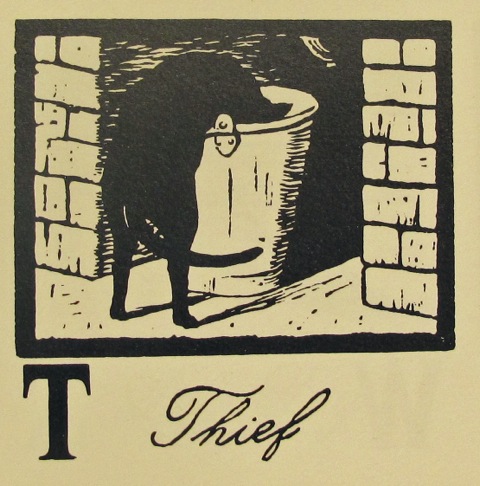
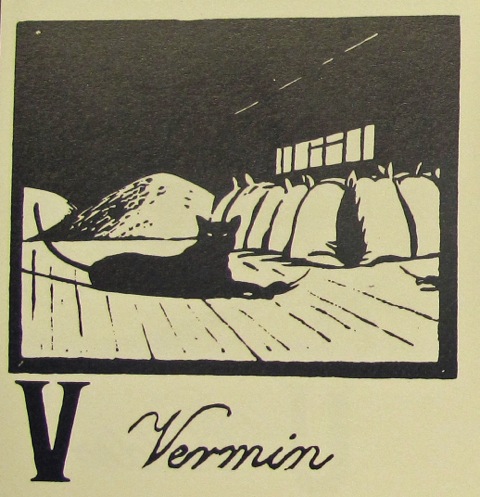
is a British children's book illustrator who works primarily in woodcuts. Heale studied typography and fine art at the Royal College of Art in London. 
In a book I recently acquired I found his amusing Alphabet that I couldn't find in Google and that is too good to be hidden, left unnoticed and not enjoyed. 


Heale has illustrated numerous works for children, including books of fables and fairy tales, such as Angela McAllister’s adaptation The Tortoise and the Hare: An Aesop's Fable (2004) and Adrian Mitchell’s retellings of Hans Christian Andersen’s The Steadfast Tin Soldier (1996) and The Ugly Duckling (1994). 

He has also illustrated several books by William Mayne, such as Tibber (1986) and Lamb Shenkin (1987). In 1997 he won the Kurt Maschler Award for his detailed woodcut illustrations for Mayne’s Lady Muck.


Monday, 2 September 2013

In the meantime


New woodblock print and other related postings will continue here in due time.  But recently, in the meantime, I am seriously and sincerely engaged in composing a book about the paintings of my late friend and impressionist painter Herman Buijtenhuijs (1944-2010).


To find, locate and photograph paintings has proven to be a laborious and time consuming task. For this reason I have started a new Blog to show what've discovered so far and to encourage unknown owners of paintings to contact me. Some 100 paintings I have uploaded and it is an ongoing enterprise. I'm in the process of revisiting the locations he painted when and where I can. 


It has taken me three months to discover and photograph some 100 paintings showing the (my beloved) Island of Ameland (Netherlands) and some 40 paintings of Ireland where Herman lived near the sea and were he painted beautiful and spectacular  Connemara from 1996 untill his untimely death 2010. There must be many paintings yet undiscovered. I also intend asking the helping hand of the (local) press.

Although the Blog is written in Dutch I invite readers to visit and have a look at a unique and  growing collection of impressionist paintings  by my friend here: http://hermanbuijtenhuijs.blogspot.nl. Or follow the page button above. 

Tuesday, 13 August 2013

Help requested


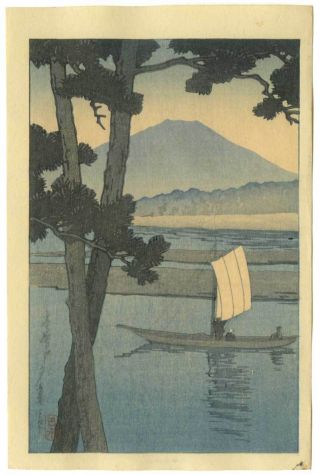
Today, making a new start after a break in posting, I ask the help of readers to identify the artist who made this print send today by reader Robert in the USA. He'd like to know who created it and when, the only clue is the former owner told him it was also shown in a book (on printmaking ?) I particularly like the square design, the diagonals and the (classic, 1/3) composition besides the icy blue long shadows. I don't remember having seen it ever.  

Wednesday, 3 July 2013

some delay

After three years of more or less regular blogging and due to recent events and circumstances there's some dealy in publishing new postings. But I'll be back with new and interesting prints (and related things of beauty) very soon. 


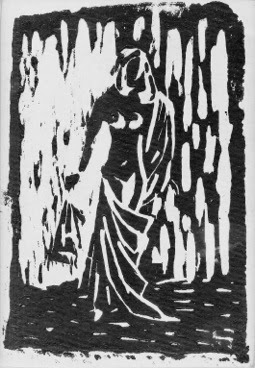
In the meantime let me know what you think of this small (9 x 13 cm.) expresessionist woodcut and what you see in it. I cannot imagine someone recognizing the maker (but who knows ?) and I'm nevertheless very interested in your opinion. 

And in the meantime have a look at my latest project commemorating Herman Buijtenhuijs (1944-2010), Dutch Impressionist painter and his artist view of the North Sea Island of Ameland  at: http://hermanbuijtenhuijs.blogspot.com or follow the link through clicking at the page above.

Wednesday, 26 June 2013

Again: Help requested

Reader Lorens first request (june 7th) for help and identifying the maker of the charming woodblock print was solved within two weeks by reader Tine. Thank you Tine.

The maker, identified by the monogram used, was American illustrator and long time contributor the the Saterday Evening Post: Moses Lawrence Blumenthal (1879-1955) See: http://americanartarchives.com/bluementhal.htm.

Today she sends two more prints for sharing and she hopes to reveal the identity maker of one of the two prints she acquired recently. The above is by Russian artist Angelika Moltschanova (Молчанова, Ангелика). I tried but failed to find any data on this artist in the Internet. And in the same lot was: 


It's 6" x 4" and most probably also Russian, circa 1960's. If you have any ideas or clues please leave your comment or email me.

Sunday, 16 June 2013

Mount Fuji, painting on silk


Mount Fuji view.

I have no idea how and when this large (60 x 70cm.) Japanese painting on silk came to the low countries. Nor have I any idea when it was painted and by whom. It was framed with an expensive frame in the-Hague, Netherlands, by framer Johan Jacob Schraag esth. Hofspui 10. It must have fallen out of grace because I stumbled over it recently, neglected and covered in dust and dirt, and couldn't resist adopting it.   
Taking it out of the frame and removing the matt for cleaning I discovered the colours have faded considerably and there's a stain in the centre. It must have been a spectacular picture once. I wonder if the fading could be restored and also if such an entreprise would be worth while. 

I couldn’t find anything resembling Googling. But there are a few things to tell about the scene, its’ location and the traditional small sailing boat from contemporary photogravures, Japanese watercolour paintings and woodblock prints. 
Mount Fuji as seen from Tagoura Harbour in Shizouka province in an old hand coloured photographure. This junk probably a larger (sea-going ?) type of sailing ship.


Above three watercolor paintings 1900-1930 with similar views and identical  small sailing ships.  
Photogravures: "Mount Fuji from Numagawa (?) along Tokaido" by Italian early photographer Adolpho Farsari (1841-1898) see here* for Yokohama Shashin and the process of Japanese hand colouring early photographures. 
Photographs sometimes were mirrored (I discovered) for postcard editions and the one below, according to the silhouette of Mt Fuji seems to have been taken on the other side of Mt. Fuji. Because of the possible mirroring effect (Mt. Fuji 's cone isn't symetyrical) however, I cannot be sure (below view from the Fuji river).  

Woodblock prints by Hasui Kawasa (1883-1957) and Hiroshige (1797-1958)
and Konen Uehara (1878-1940) (Compare the asymetry  to the postcard above !)


PS: don't try to do what I did. Improving the faded areas. The very very thin silk mesh is painted/dyed before it is attached to a cotton backing cloth. Any attempt to add pigment seeping through the mesh and colouring the white underlying cotton. Also the condition of silk has deteriorated so much due to UV-light it disintegrates almost while looking at it. Let alone when you touch it. In the end it proved to be an hopeless endeavor. For an amateur. So: lessons learned.     


All pictures (mouse-clickable to embiggen) borrowed freely from the Internet for friendly educational and non commercial use only.